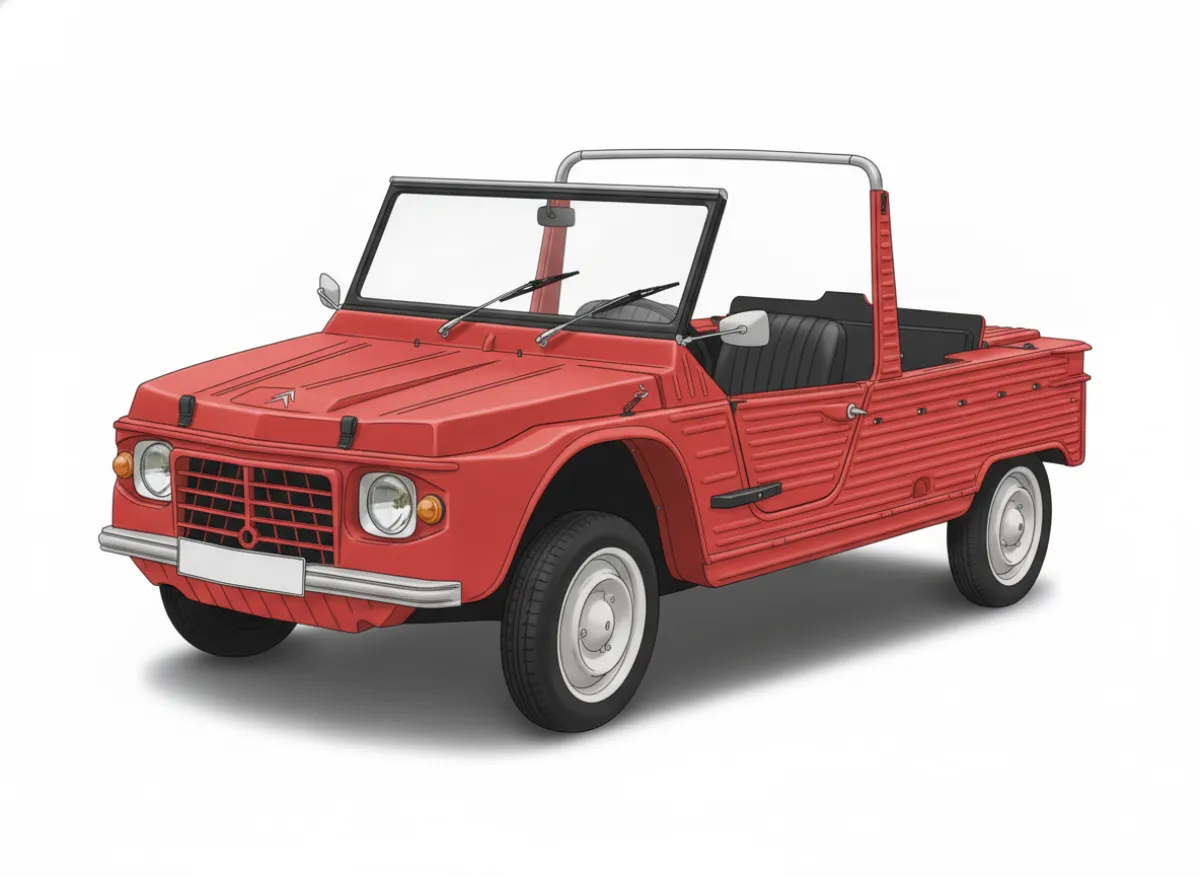
In production
Units built
Not documented
Origin
France
Production
1968–1988
Class and layout
Off-road compact SUV (J) · Front engine, front-wheel drive / four-wheel drive
Catalog recordWikipedia ↗
A breadth record from Wikipedia. Year-by-year colors, serial ranges and prices are in researched dossiers; this car does not have one yet.
The Citroën Méhari is a lightweight recreational and utility vehicle, manufactured and marketed by French carmaker Citroën over 18 years in a single generation. Built in front-wheel (1968–1988) and four-wheel drive (1980–1983) variants, it features ABS plastic bodywork with optional/removable doors and foldable, stowable, fabric convertible top. The Méhari weighed approximately 535 kg (1,179 lb), and featured the fully independent suspension and chassis of all Citroën 'A-Series' vehicles, using the 602 cc (36.7 cu in) variant of the flat twin petrol engine shared with the 2CV6, Dyane, and Citroën Ami.
Text from Wikipedia, CC BY-SA 4.0.
Specifications
- Bodies
- 2-door utility roadster
- Engines
- 602 cc, air-cooled flat-2
- Gearboxes
- Not recorded
- Platform
- Citroën 2CV platform
- Size
- 3,520 × 1,530 × 1,640 mm
- Wheelbase
- 2,400 mm
- Weight
- 570 kg
- Battery
- Not recorded
- Range
- Not recorded
- Designers
- Roland de La Poype
Where it was built
- France: Villejuif (S.E.A.B.)
- France: Bezons (E.N.A.C.)
- France: Paris
- France: Levallois-Perret
- France: Rennes La-Janais
- Argentina: Buenos Aires (Citroën Argentina, S.A./IES)
- Belgium: Forest (Citroën Forest factory)
- Portugal: Mangualde (Mangualde Plant)
- Spain: Vigo (Vigo Plant)
- Uruguay: Montevideo (Nordex S.A.)
- Yugoslavia: Slovenia (Smrtnik factory)
Replaced by
Related
- Citroën Dyane
- Baby Brousse
- Citroën FAF
Alongside it at Citroën
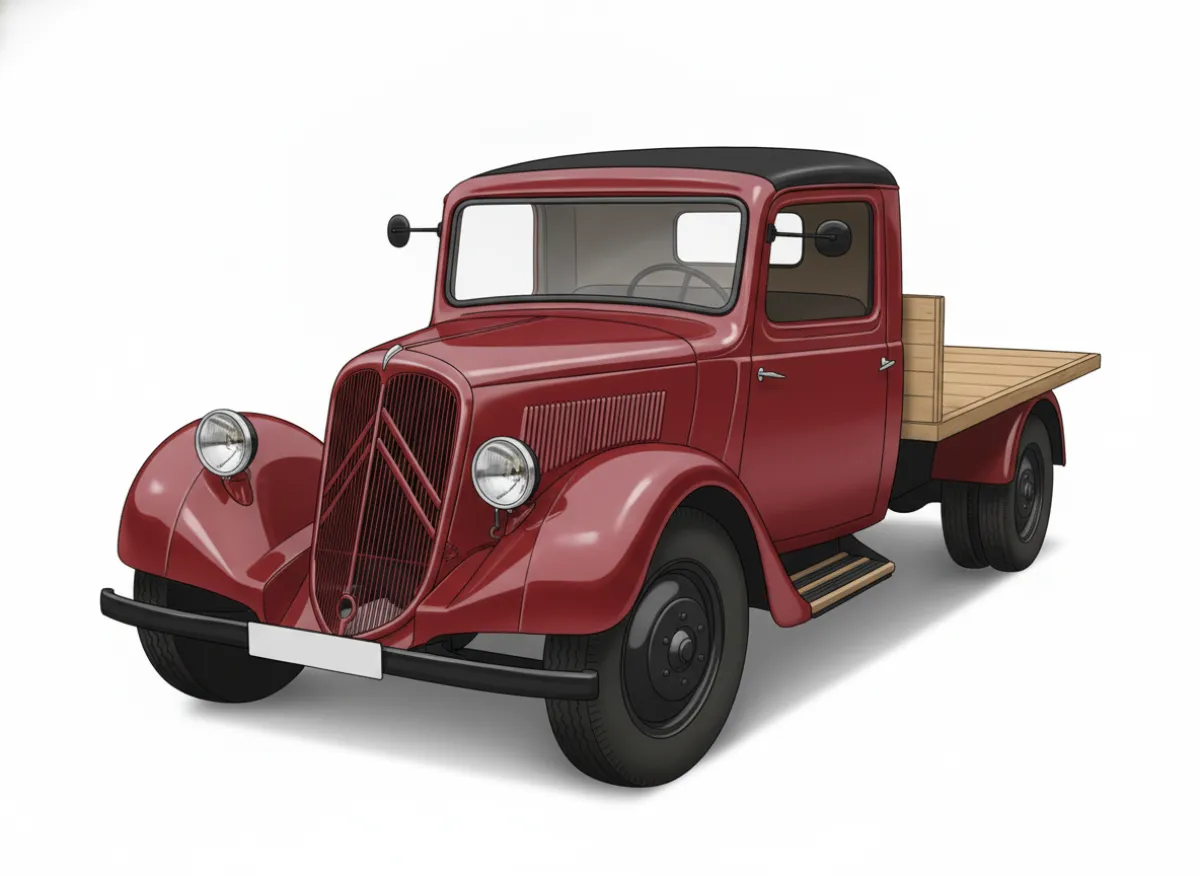
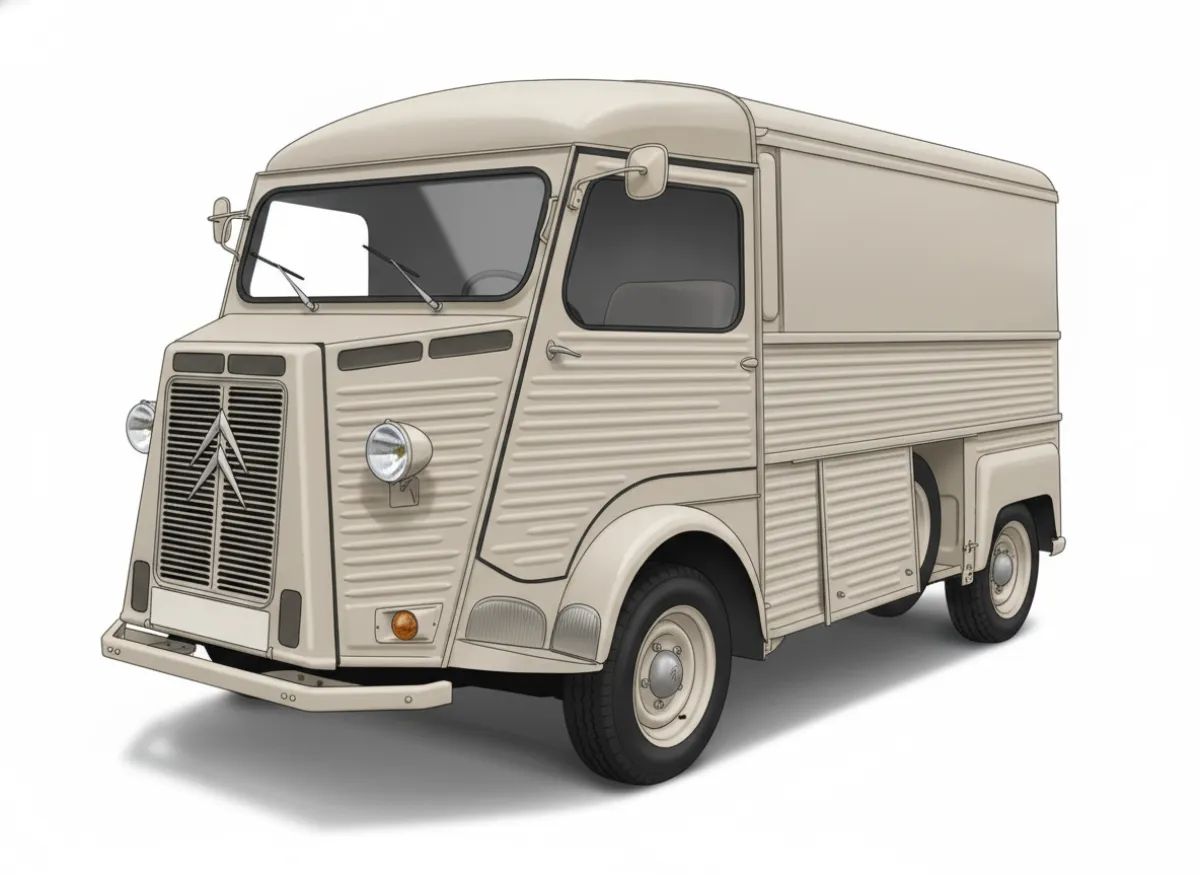
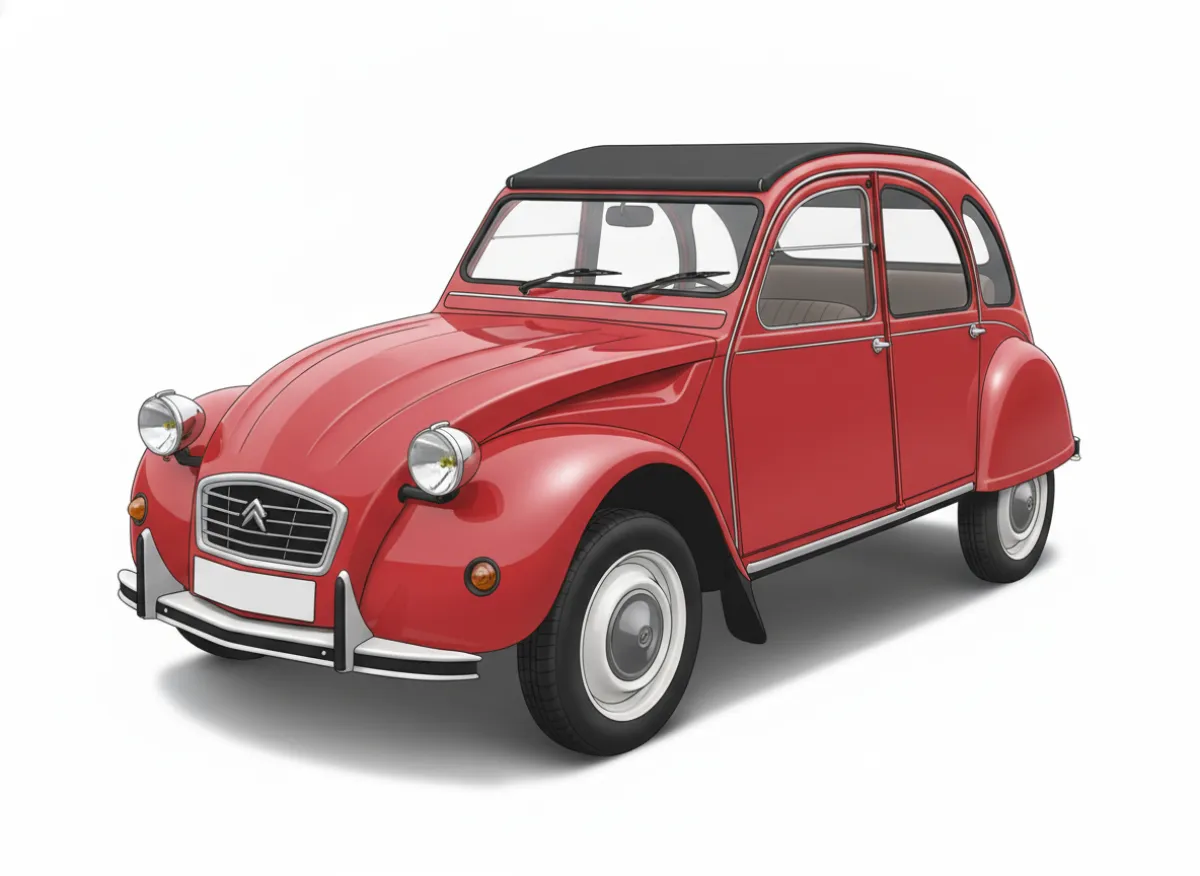
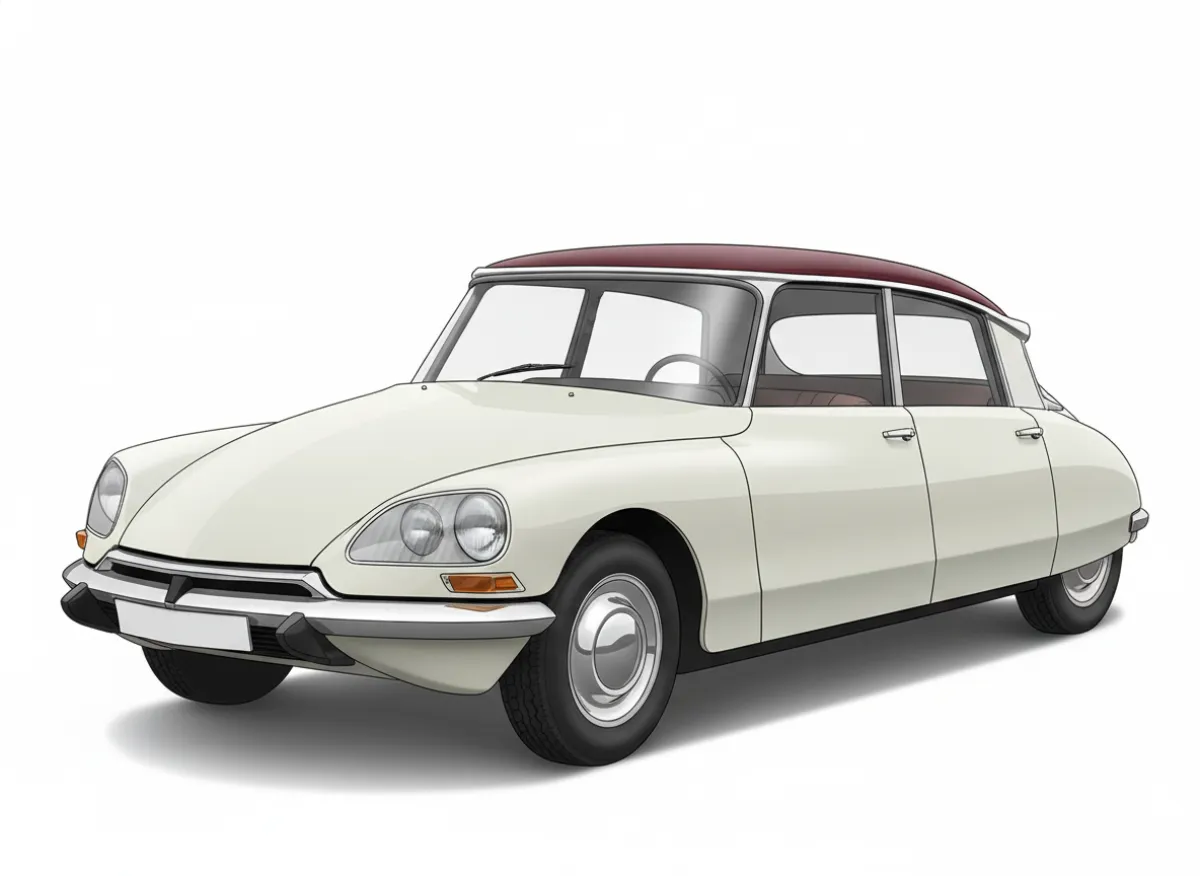
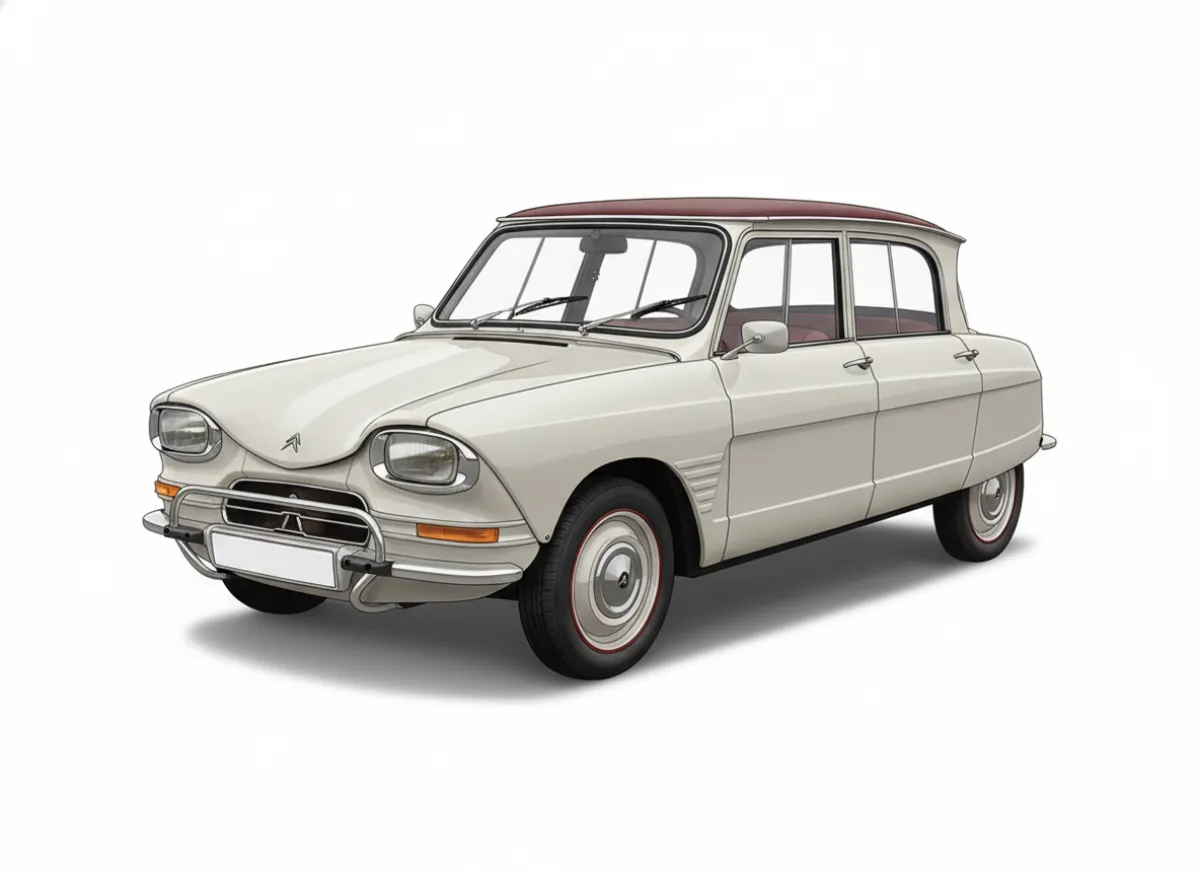

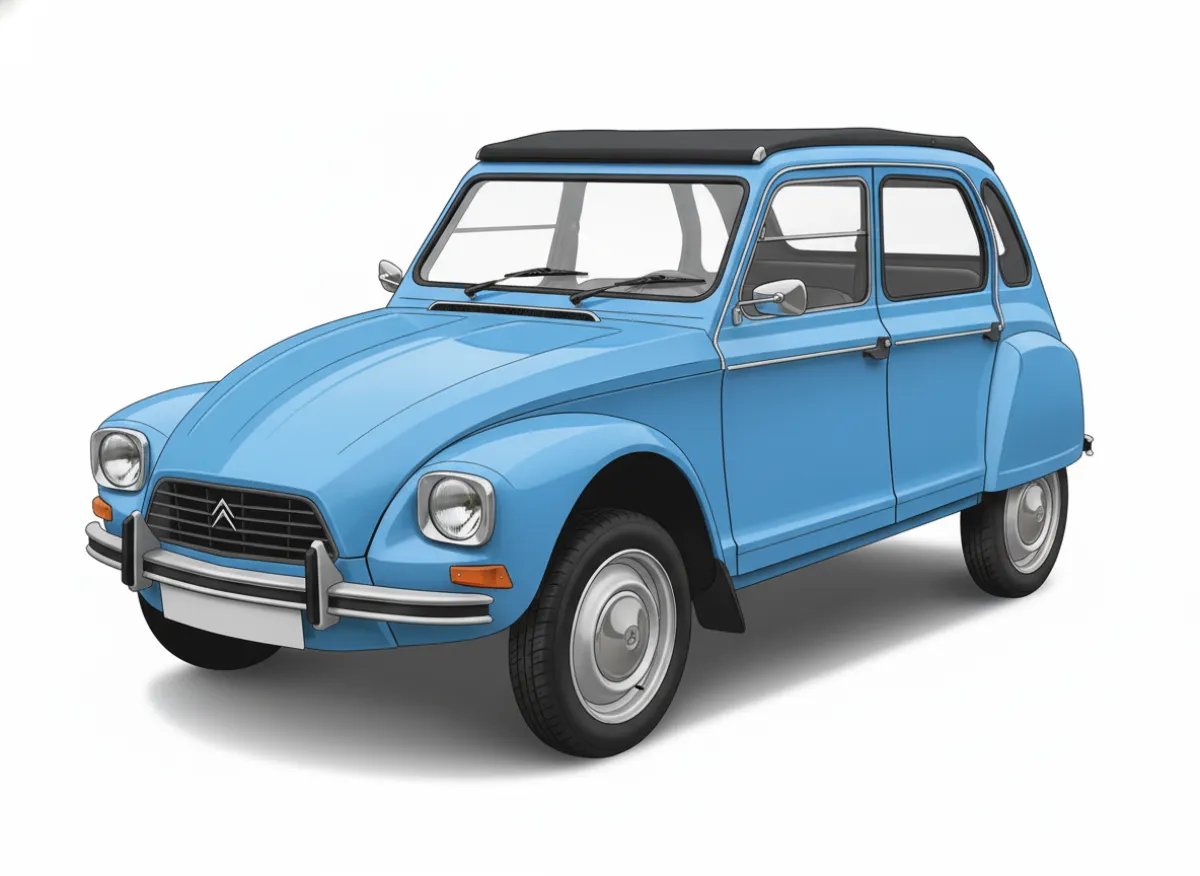
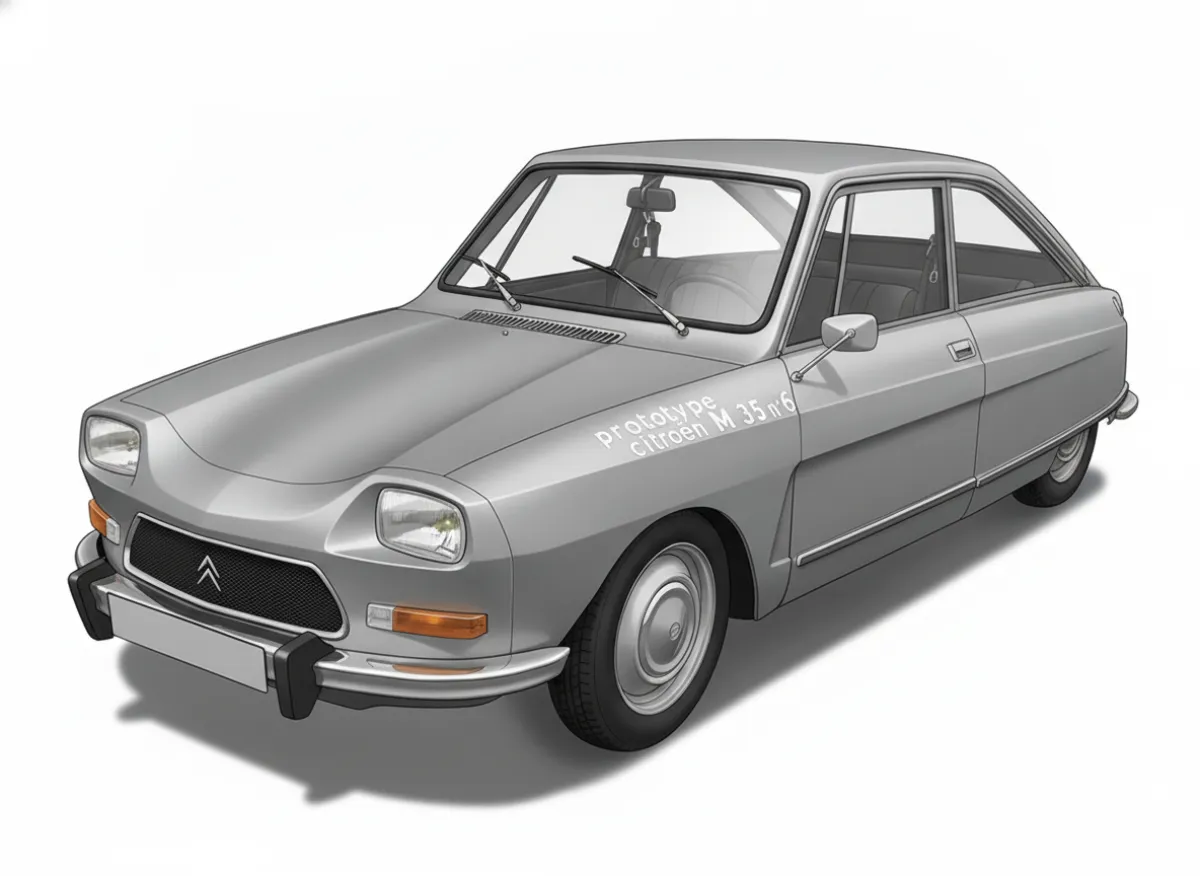
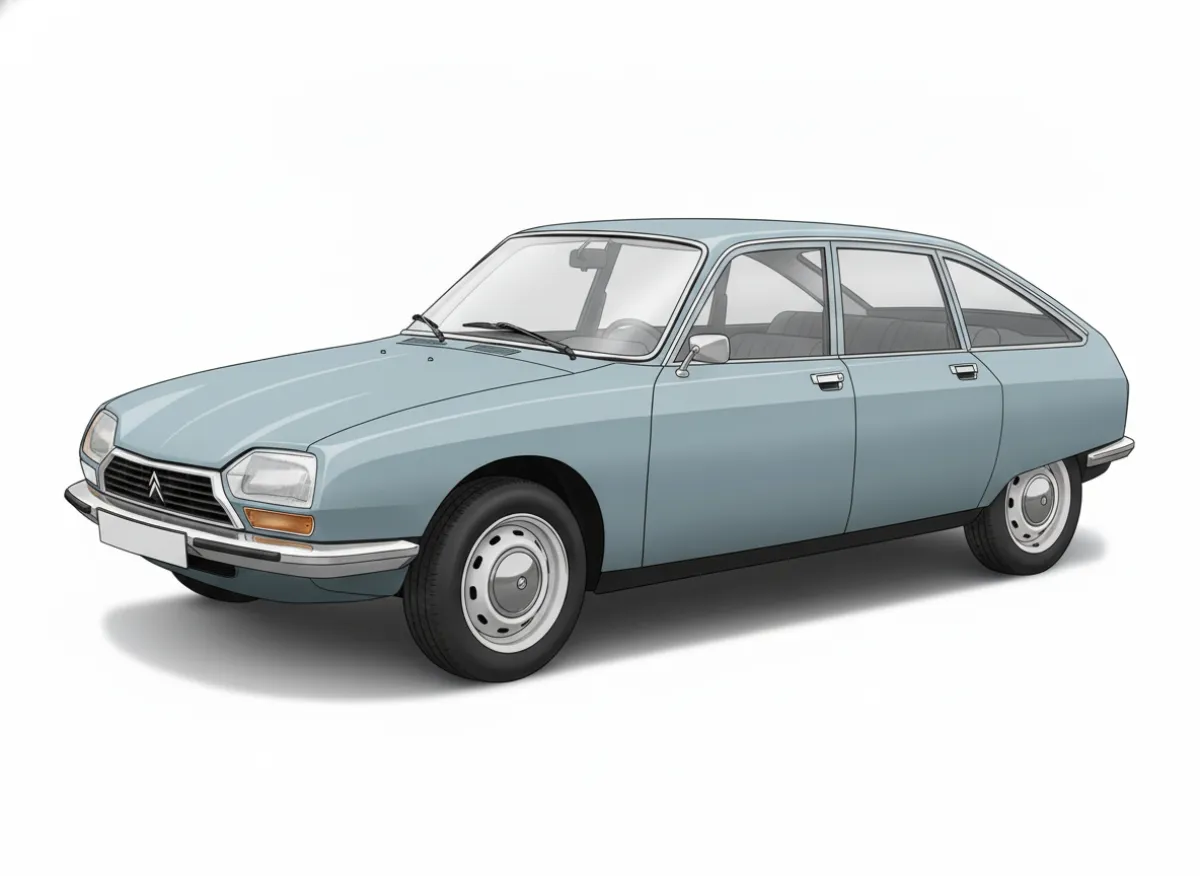
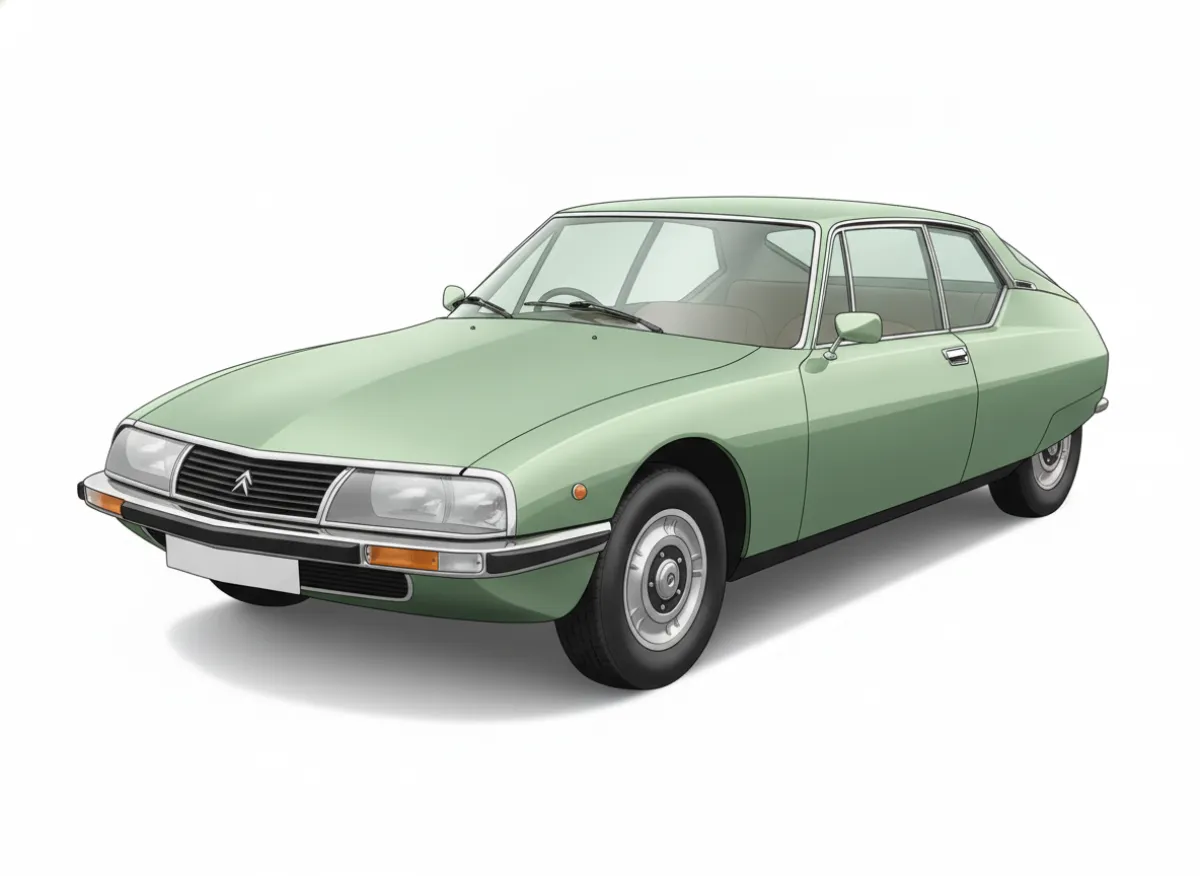
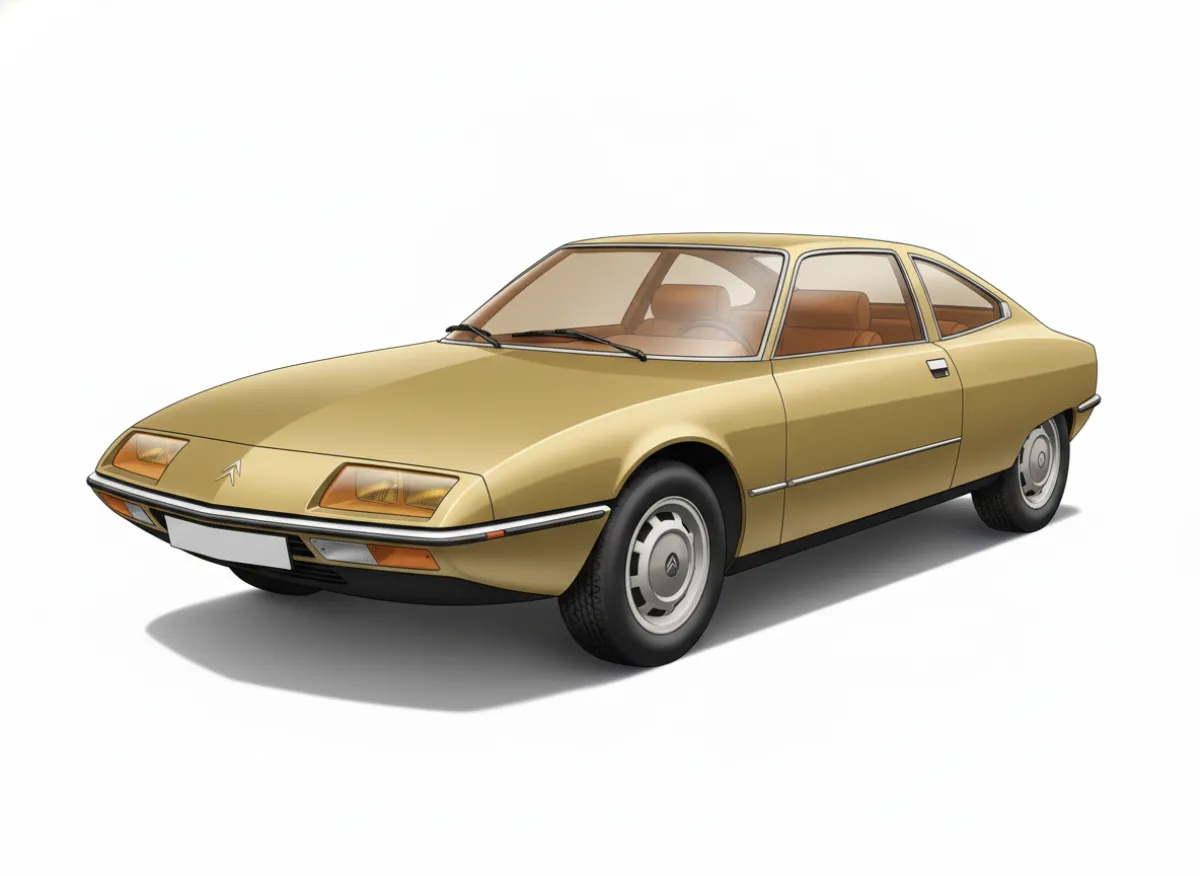
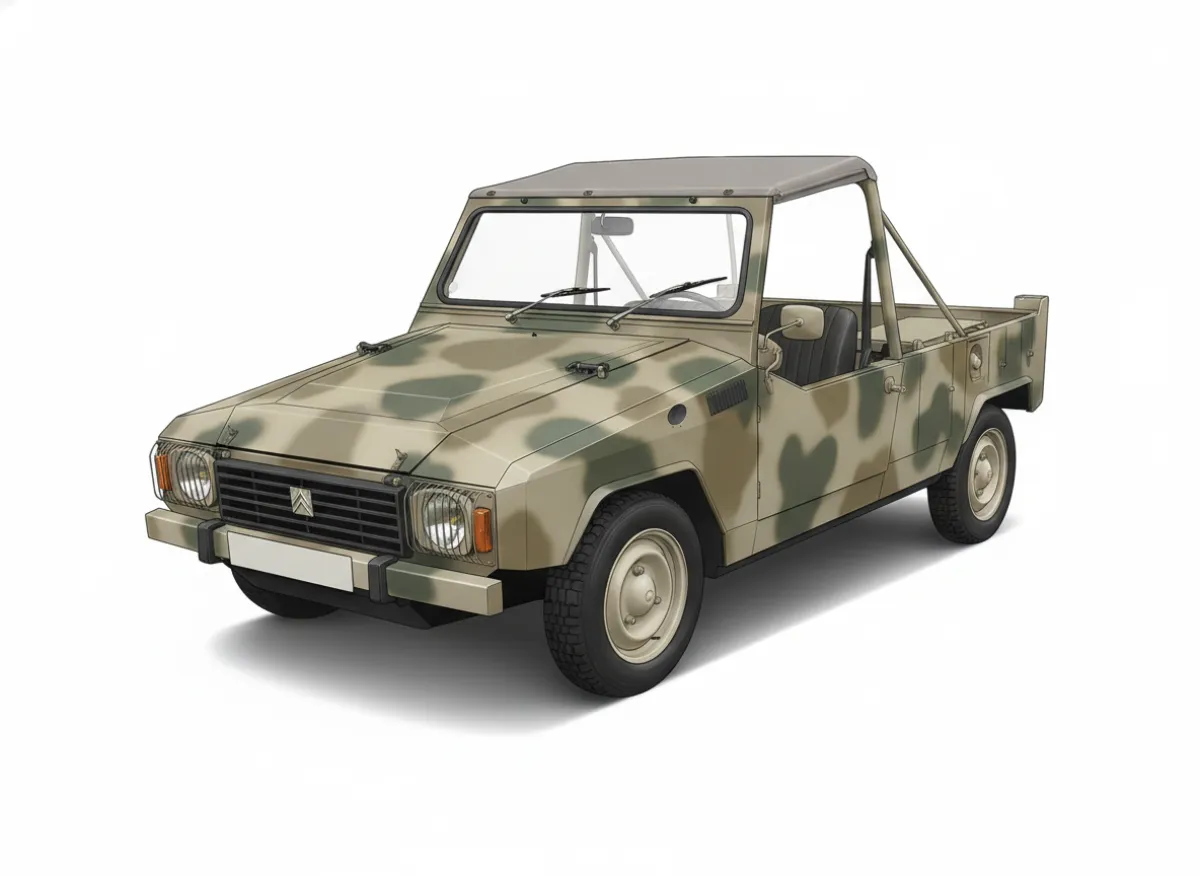
Class: Off-road compact SUV (J).