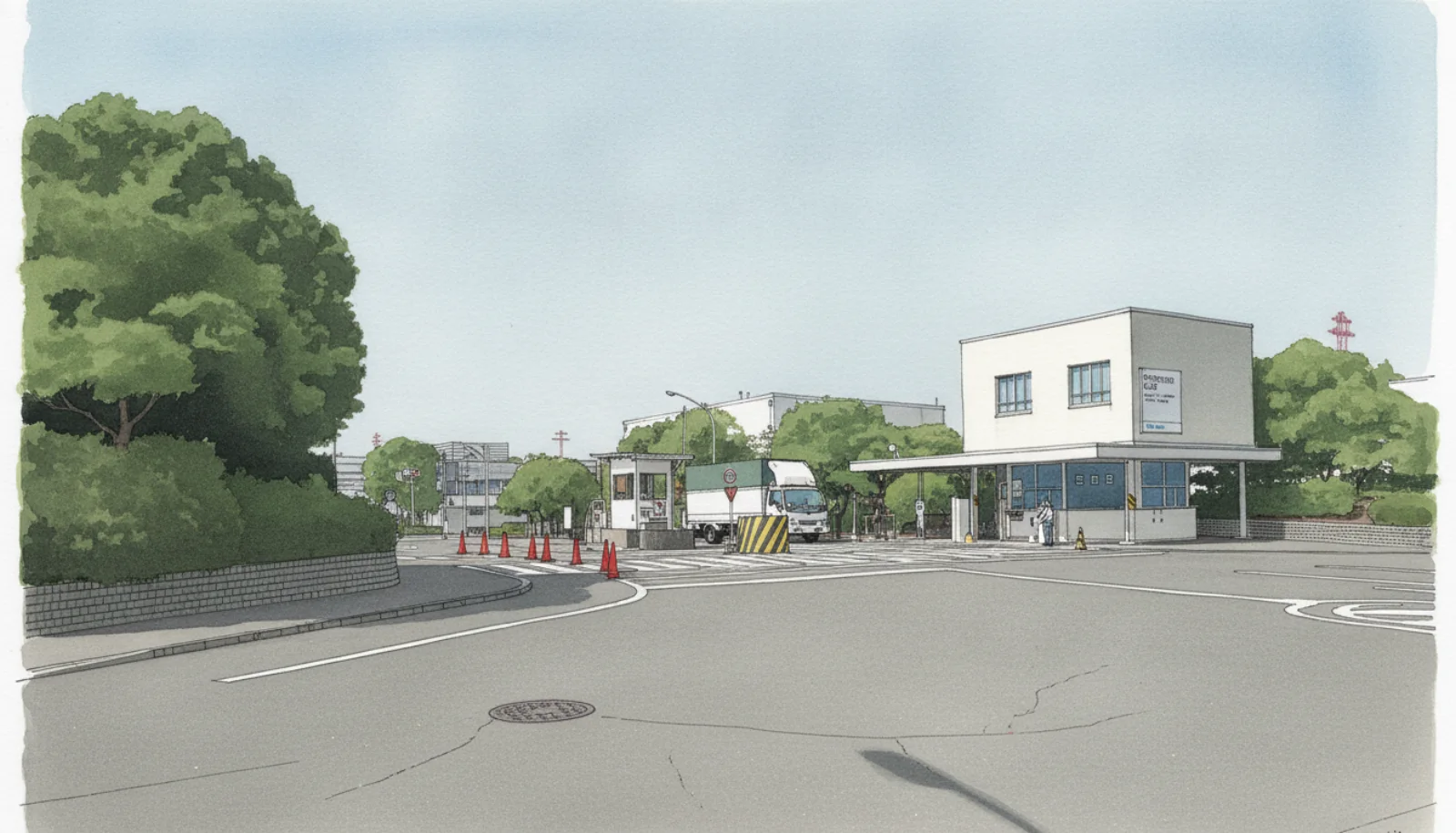
Mazda's Hiroshima Plant has two parts: the original head-office works at Fuchu, where the company has been since 1931, and the Ujina district on reclaimed land facing Hiroshima Bay in Minami-ku, joined to the head-office site by Mazda's own private bridge, opened in 1965. Ujina was built in the 1960s, when the company was still called Toyo Kogyo and was moving from three-wheeled trucks into passenger cars. Ujina No. 2 opened first, as an engine plant, in December 1964; Ujina No. 1 began assembling vehicles in November 1966; and No. 2 switched to vehicle assembly in December 1972. Since No. 2 restarted in 2004 the Fuchu side has stopped assembling cars and makes engines and manual transmissions, so Ujina is where Mazda's Hiroshima cars are now put together.
Ujina No. 1 is the home of the MX-5. Mass production of the first-generation car began there in April 1989, and every later generation has followed on the same line, the RF hardtop included, passing one million MX-5s in April 2016. U1 has built a wide mix alongside it: the Demio from 1996, the RX-8, the MPV and Bongo vans, the Biante, and the North American CX-9, and later the CX-3, CX-5, CX-30 and MX-30. U2 was shut in September 2001 during Mazda's restructuring and reopened in May 2004 to build compacts, crossovers and minivans, and in 2011 it began building the first CX-5.
In December 2004 a fire damaged the U1 paint shop; Mazda borrowed U2's paint shop and other facilities to keep production going, and U1 resumed full painting in April 2005 with a new three-layer wet paint system. The Mazda Museum, opened in 1994, sits inside the Ujina site next to U1, and visitors' tours include the working assembly line.
Opened
Still building
Today
- Status
- operating
- Models built
- 18
- Components
- 2
- Peak workforce
- Not documented
- Location
- 34.3771, 132.5030
- Also called
- Ujina Plant No. 1 (U1), Ujina Plant No. 2 (U2), Toyo Kogyo Ujina plant, マツダ本社工場 宇品地区
Cars built here
- 1989–1997Mazda MX-5 / Eunos Roadster / Miata (NA) · 431,506Mass production began at Ujina Plant No. 1 in April 1989 (Mazda); production ended December 1997. 431,506 is the NA total given by Wikipedia; all NA cars were built at Hiroshima per English Wikipedia.
- 1996–2014Mazda Demio / Mazda2 (DW, DY, DE)Demio production began at U1 in July 1996; the third-generation Mazda2 rolled off the U1 line in May 2007, with U2 adding it from June 2007. The end year is Japanese Wikipedia's listing for the Hiroshima (Honsha) Plant as a whole, not specific to Ujina.
- 1998–2005Mazda MX-5 / Roadster (NB)English Wikipedia gives 1998–2005 and assembly at Ujina Plant No. 1 for the MX-5 line.
- 2003–2012Mazda RX-8Built on the U1 line before the December 2004 fire and again from February 2005; the 2003–2012 span is Japanese Wikipedia's listing for the Hiroshima Plant, and Mazda announced in 2011 that production would end in summer 2012.
- 2004–2005Mazda MPVDocumented on the U1 line before the December 2004 fire and restarting there in January 2005. Japanese Wikipedia lists the MPV at the Hiroshima Plant 1989–2016 without separating Ujina from Fuchu.
- 2004–2005Mazda Bongo, Bongo Brawny and Bongo FriendeeDocumented on the U1 line before the December 2004 fire; Bongo and Bongo Brawny resumed at U1 in February 2005, the Bongo Friendee did not. Full span at Ujina not documented.
- 2004–2005Mazda VerisaDocumented on the U1 line before the December 2004 fire and restarted by January 2005. Full span at Ujina not documented.
- 2005–2015Mazda MX-5 / Roadster (NC)Production kicked off on 17 May 2005 at U1, the first new model mass-produced there after the paint-shop rebuild.
- 2005Mazda Mazda3 / AxelaAdded at U2 from 28 June 2005 (about 2,000 a month for Europe, North America and Australia) alongside Hofu. Only the 2005 start is documented; how long Ujina built the Mazda3 is not.
- 2006–2012Mazda CX-7North American production started at U2 in February 2006; end year from Japanese Wikipedia's Hiroshima Plant list.
- 2006–2023Mazda CX-9 (first and second generation)First generation started at U1 in October 2006; second generation started at U1 in February 2016. Japanese Wikipedia lists the CX-9 at the Hiroshima Plant 2007–2023.
- 2008–2017Mazda BianteProduction kicked off at U1 in May 2008; end year from Japanese Wikipedia's Hiroshima Plant list.
- 2010–2017Mazda Premacy / Mazda5 (third generation, 2WD)2WD Premacy production started at U2 on 13 May 2010; end year from Japanese Wikipedia's Hiroshima Plant list.
- 2011–nowMazda CX-5First-generation production began at U2 in November 2011 and was extended to U1 from March 2013; the second generation started at U2 in November 2016. Japanese Wikipedia lists the CX-5 as current at both U1 and U2.
- 2014–2022Mazda CX-3Production began at U1 in December 2014; Hofu added it in December 2016. Japanese-market production moved to Thailand in June 2022 per Japanese Wikipedia.
- 2015–nowMazda MX-5 / Roadster and MX-5 RF (ND)Production began at U1 on 5 March 2015; the RF retractable hardtop followed at U1 on 4 October 2016.
- 2019–nowMazda CX-30Listed by Japanese Wikipedia as current at U1.
- 2020–nowMazda MX-30Listed by Japanese Wikipedia as current at U1.
Parts made here
- Engines (Ujina No. 2 engine plant) · 1964–1972U2 opened as an engine plant in December 1964 and switched to vehicle assembly in December 1972.
- V6 and in-line four-cylinder gasoline engine parts machining (mixed-model line) · 2007–nowMazda announced mixed-model machining of V6 and I4 engine parts at the Ujina plant in July 2007; later years not documented.
Pictures
Milestones
- 1964
Ujina No. 2 begins operating as an engine plant (December).
- 1965
Toyo Ohashi, Mazda's private bridge linking the Ujina site, opens (October).
- 1966
Ujina No. 1 begins operating as a vehicle assembly plant (November).
- 1972
Ujina No. 2 begins vehicle assembly (December).
- 1989
Mass production of the MX-5 begins at Ujina No. 1 (April).
- 1994
Mazda Museum opens (May) inside the Ujina site, next to U1.
- 1996
Demio production begins at U1 (July).
- 2001
Ujina No. 2 closed on 14 September.
- 2004
Ujina No. 2 reopens on 26 May; in December a fire damages the U1 paint shop.
- 2005
U1 paint shop resumes on 27 April with the Three Layer Wet Paint System; third-generation MX-5 production starts on 17 May.
- 2007
Mazda's 40 millionth vehicle built in Japan rolls off the U2 line, a Mazda2 (17 July).
- 2011
First-generation CX-5 production begins at U2 (November).
- 2012
Aqua-tech water-based paint system installation completed at U1.
- 2016
Mazda MX-5 production reaches one million on 22 April.
Sources
- Mazda Produces One-Millionth Mazda MX-5 — Mazda Motor Corporation
- Major Facilities — Mazda Motor Corporation
- Historical Highlights — Mazda Motor Corporation
- Mazda Motor Corporation to Restart Production at Ujina No.1 Plant in April — Mazda Motor Corporation
- Mazda Resumes Ujina No.1 Plant Paint Shop Operations — Mazda Motor Corporation
- Mazda Starts Production of All-New MX-5 — Mazda Motor Corporation
- Mazda to Increase Production of Popular Mazda3 — Mazda Motor Corporation
- Mazda Starts Production of the All-New Mazda CX-7 Crossover SUV for the North American Market — Mazda Motor Corporation
- Mazda Demio Production in Japan Hits One Million Units — Mazda Motor Corporation
- Mazda Starts Production of the CX-9 — Mazda Motor Corporation
- All-New Mazda2 Rolls Off Production Line at Ujina Plant No.1 — Mazda Motor Corporation
- Mazda Marks 40 Million Units of Cumulative Vehicle Production in Japan — Mazda Motor Corporation
- Mazda Achieves Mixed Model Production of V6 and In-Line Four-Cylinder Engines — Mazda Motor Corporation
- Mazda Commences Production of All-New Biante Minivan — Mazda Motor Corporation
- Pre-Orders Start for All-New Mazda Premacy in Japan — Mazda Motor Corporation
- Mazda RX-8 SPIRIT R Coming to Japan in November 2011 — Mazda Motor Corporation
- Mazda to Increase Mazda CX-5 Production Capacity — Mazda Motor Corporation
- Mazda Starts Production of All-new Mazda MX-5 — Mazda Motor Corporation
- Mazda Begins Production of All-new Mazda CX-9 — Mazda Motor Corporation
- Mazda Begins Rollout of Aqua-tech Paint System to Overseas Plants — Mazda Motor Corporation
- Mazda Starts Production of the Mazda MX-5 RF — Mazda Motor Corporation
- Mazda Starts Production of All-New Mazda CX-5 — Mazda Motor Corporation
- Mazda Begins CX-3 Production at Hofu Plant — Mazda Motor Corporation
- MAZDA CX-5 Achieves Five Million Units in Global Production and Sales — Mazda Motor Corporation
- マツダ本社工場 — Wikipedia (Japanese)
- マツダミュージアム — Wikipedia (Japanese)
- 東洋大橋 — Wikipedia (Japanese)
- マツダ・ロードスター — Wikipedia (Japanese)
- Mazda MX-5 (NA) — Wikipedia
- Mazda MX-5 — Wikipedia
- Ujina vs Honsha/Fuchu: Mazda's facilities page lists the Hiroshima Plant as the head-office area (Fuchu-cho, Aki-gun) plus the Ujina district with Ujina Plant No. 1 (U1) and No. 2 (U2). Japanese Wikipedia says the head-office (Fuchu) side stopped vehicle assembly when U2 reopened in 2004 and now makes engines, diesel engines and manual transmissions; those Fuchu products are not listed here. Many Mazda releases say only 'Hiroshima Plant'; models are listed here only where a source names Ujina, U1 or U2.
- Coordinates are those of the Mazda Museum (Japanese Wikipedia), which that article places inside the Mazda site in Ujina, Minami-ku, next to Ujina Plant No. 1. No coordinate for the plant buildings themselves was found.
- Opening year is 1964, when U2 started as an engine plant; vehicle assembly at Ujina began with U1 in November 1966.
- Pre-2004 model history: Japanese Wikipedia's past-models list for the Honsha Plant (Familia, Luce, Capella, Savanna RX-7, Cosmo, Titan, Parkway, Sentia, MPV, Premacy, Fiat 124 Spider, Abarth 124 Spider, CX-8 and others) does not separate Ujina from Fuchu, and Mazda's English newsroom archive has no individual releases before 2005. Which of those models were assembled at Ujina between 1966 and 2004, other than the MX-5 (1989) and Demio (1996), could not be documented. The Fiat 124 Spider and Abarth 124 Spider (2016–2020, MX-5-based) may have been built at Ujina alongside the MX-5, but no source opened says where, so they are left out.
- Spans for the MPV, Bongo family and Verisa are only the years in which Mazda's January 2005 release documents them on the U1 line; their full Ujina spans are unknown. End years for the Demio/Mazda2, RX-8, CX-7, CX-9, Biante and Premacy come from Japanese Wikipedia's Honsha Plant list, which covers the whole Hiroshima Plant.
- Mazda3/Axela: U2 production from June 2005 is documented; the end of Ujina production is not, so the span shows only the documented year.
- CX-3: Mazda's Hofu release says U1 production began December 2014; Japanese Wikipedia's Honsha list gives 2016–2022. Mazda's date is used.
- MX-5 NA units: 431,506 is the NA production total in English and Japanese Wikipedia. Mazda states mass production began at U1 in April 1989; Japanese Wikipedia gives production end December 1997.
- workforcePeak: no Ujina headcount was found in Mazda or Wikipedia sources.
- Photos: only one openly licensed Commons photograph could be tied to Ujina (the East Main Gate, which Japanese Wikipedia identifies as the gate of Ujina Plant No. 1). Other Commons photos of 'Mazda factory in Hiroshima' (Taisyo, 2010) do not say which part of the site they show, and the north gate photo is in Ōzu, beside the head-office area, so they were not used.